
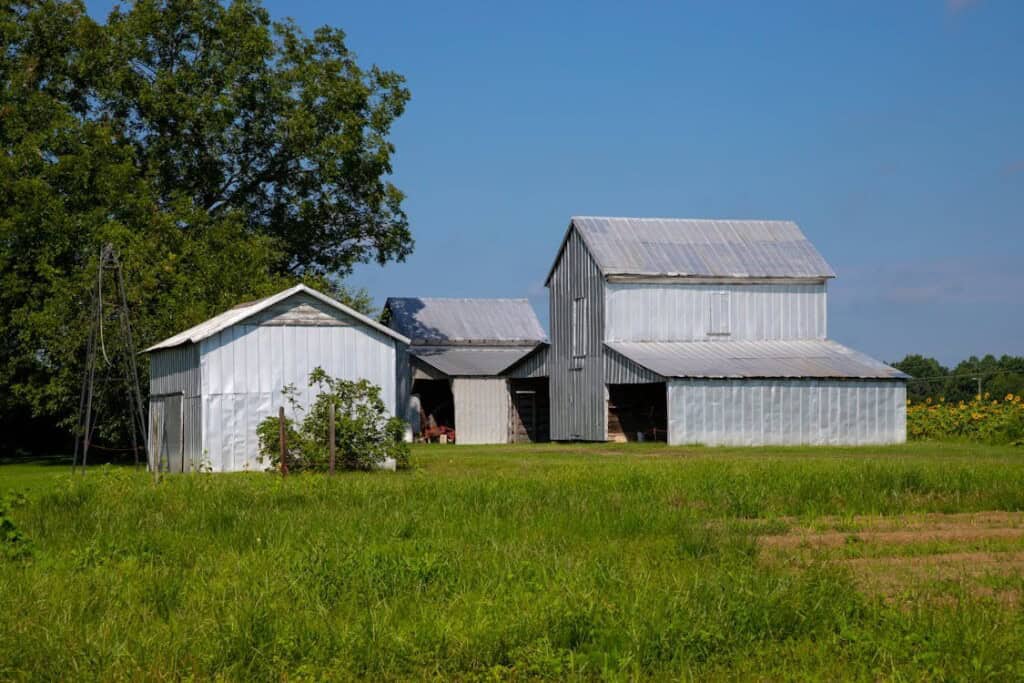
Ready for a building that offers durability, versatility and serious value?
They’re called enclosed pole barns and these structures are quickly becoming the solution of choice for homeowners who want a building that can do it all. Workshops, storage buildings, and even home living spaces…
Enclosed pole barns are different.
And we mean that in a good way.
Built right, an enclosed pole barn can last 40 to 60 years with proper maintenance and care. In fact, there are examples of pole barn structures built over 100 years ago that are still standing strong. Talk about lasting value.
But when it comes to enclosed pole barns, not all buildings are created equal. The features included in your building decide everything from durability and longevity to functionality.
Let’s take a look at the key features of modern enclosed pole barns…
In This Article
- What Makes Enclosed Pole Barns Different?
- Must-Have Structural Features
- Climate Control & Insulation Choices
- Popular Door Options
- Interior Finishing Ideas
What Makes Enclosed Pole Barns Different?
One of the biggest benefits of an enclosed pole barn is full protection, privacy and security. No more worrying about what you store in the building getting damaged by the elements because you’ve got total enclosure. Also unlike their three-sided cousin, enclosed pole barns…
Provide a completely controlled environment. This makes them ideal for workshops, garage building, agricultural storage, or even living spaces.
Most of this has got to do with how enclosed pole barns are constructed. Post-frame buildings use large poles set into the ground or concrete that carry structural loads straight to the earth. Since the weight isn’t being transferred to interior support walls like with traditional building methods, you get incredibly large open floor plans.
Thinking about building enclosed pole barns? Make sure you know the important features that fit your needs. The right choices can turn a simple steel building into a specialized workshop or fully finished barndominium.
Why We Love Enclosed Pole Barns
- Speedier construction times when compared to traditional stick built methods
- Cost effective materials that don’t sacrifice structural integrity
- Designs that can be used for agricultural, commercial and residential purposes
- Exceptional storm resistance since posts are anchored deep in the ground
You’ll be amazed at what you can do with the right enclosed pole barn plan. Want a building to store your equipment? Done. Need a space to work or live? You got it. These versatile buildings can be customized with the right features to meet your every need.
Must-Have Structural Features
When it comes to enclosed pole barns, the bones have got to be strong. Structural features are what make your building last.
Here are the important details:
Posts & Treatment Levels
If your enclosed barn isn’t standing tall next year, none of the other features matter. Posts should be treated lumber that can resist decay and insect damage for decades. According to HomeGuide, material costs are typically 65% to 75% of your total pole barn price. Cutting corners will come back to haunt you later.
The enclosed pole barns we build today use posts with much higher treatment levels. The higher the retention rate, the longer that post will last buried in the ground.
Trusses
Think of trusses as the glue that holds your roof system to the columns. If a truss fails, you’re bringing the whole building down with it.
Trust us.
Buildings from major manufacturers use what’s called job-ordered trusses. Basically, this means the trusses are engineered specifically for your building and local environmental conditions. No guessing if your roof can handle local snow loads or wind speeds.
Metal Panel Systems
The exterior material you choose determines both weather resistance and aesthetics. Metal panels used on modern enclosed pole barns utilize high tensile strength steel with quality paint systems to prevent chalking, fading and rust. We suggest looking for metal that is at least 29-gauge with a minimum yield strength of 80,000 PSI.
Climate Control & Insulation Choices
You can winter over in an enclosed pole barn if you want. But it’s not going to be very comfortable without some sort of climate control.
Insulation is key.
Don’t mistake us. We love buildings that can go HVAC optional. But if you will be heating or cooling your enclosed pole barn, insulation is mandatory. Otherwise, your energy bills will soar and you’ll hate every season that requires you to spend more to stay comfortable. Insulation also protects the longevity of your structure by minimizing expansion and contraction of materials.
Here are your insulation options:
- Spray foam insulation is always a great option for maximum energy efficiency and moisture control.
- Fiberglass bat insulation provides a budget friendly alternative.
- Rigid foam boards can be easy to install and will provide great coverage.
- Blown in insulation is perfect for those hard to reach areas.
Once you’ve insulated your building, outfitting it with a proper HVAC system will ensure temperatures stay consistent no matter what Mother Nature throws at you. Some building owners are even using solar energy systems to heat their pole barn buildings.
Don’t forget ventilation. Ridge vents, exhaust fans, and intake systems help circulate fresh air and keep moisture at bay. This prevents damage to stored items and creates a healthier environment for occupants.
Popular Door Options
One of the biggest mistakes we see with enclosed pole barns is incorrect door selection. Think about it…
If people and equipment can’t access what’s inside your building because the doors are too small, you’ve wasted your time. Thankfully modern enclosed barns can come with several different door configurations depending on your needs.
Here are the options we usually recommend:
- Overhead doors are great for allowing vehicle and equipment access.
- Sliding doors allow for wide openings without the need of swing clearance.
- Walk doors are self-explanatory but incredibly important.
- Dutch doors provide ventilation while maintaining security.
Width and placement of doors is something you should discuss with your building company. A workshop building will have different needs than a pure agricultural storage building. Commercial applications may even require multiple large openings for equipment movement.
Door hardware is important as well. You want tracks, hinges, and locks that are built to last and won’t need replacing every few years.
Interior Finishing Ideas
This could be the fun part. Depending on how you intend to use your enclosed pole barn, finishing options can range from completely bare-bones to full-on residential living spaces.
It all comes down to this question:
What will you be using the building for? A simple storage building can get away with nothing more than a gravel or concrete floor. A workshop might benefit from having insulated walls and proper lighting. But if you’re building a barndominium you’ll want finishes that include drywall, flooring, and complete utilities.
Some common interior finishing features include:
- Steel liner panels add incredible durability to your wall surfaces.
- OSB or plywood are both great options for paintable surfaces.
- Concrete slab flooring just makes sense for durability and easy cleaning.
- Don’t forget about electricity. You’ll want lighting and power.
- Plumbing. Everyone digs plumbing.
Just like with exterior features, your building can be upgraded over time. Start with the basics and evolve your pole barn interior as your needs and budget change.
Wrapping It Up
Modern enclosed pole barns offer incredible value. Not only can they be used for nearly any purpose, but they’re also built to provide many decades of use when done correctly.
Here’s what you need to know:
- Structural integrity starts with quality posts and engineered trusses.
- Climate control choices will dictate how you use your building.
- Door configurations should be based on how you plan to access your building.
- You can upgrade your interior finishes as your needs change.
The ability to customize an enclosed pole barn allows it to do anything a traditional building can and more. Take a look at the open floor plans afforded by post-frame construction.
Investing in quality material and professional building practices from the start means your new building will serve its purpose for decades. It’s truly the best way to maintain your investment’s value and functionality.
That’s the beauty of a well-designed enclosed pole barn.