
Key Takeaways
- Utility supply chains are undergoing significant transformations to meet increasing demands and technological advancements.
- Integration of AI and digital tools enhances supply chain resilience and efficiency.
- Strategic partnerships and sustainable practices are becoming central to modern supply chain strategies.
Introduction
The utility industry stands at the intersection of technological disruption, increased energy demand, and urgent sustainability requirements. Utility companies must rethink and retool their supply chain strategies to remain both effective and resilient in a rapidly changing marketplace. Notably, innovation, visibility, and digital transformation play crucial roles in fast-tracking this evolution. The diverse demands on utilities—from powering homes to fueling new data-driven industries—require coordination with every link in the value chain, including selecting the right electrical equipment supplier for construction. Secure sources of equipment, components, and raw materials are fundamental as utilities race against the clock to modernize infrastructure and scale with surging power needs.
Energy usage is increasing at a pace never before seen, driven by population growth, digital transformation, and the electrification of the transportation sector. As the backbone of a functioning society, the utility industry faces unprecedented pressure to boost its supply chain efficiency, contain costs, and keep pace with market changes.
Rising Energy Demands and Supply Chain Pressures
The rise of AI, digital services, and data center development is unleashing new waves of energy demand, forcing utilities to rethink both production capacity and supply chain agility. According to a Reuters report, U.S. electric utilities have been inundated with requests for new power capacity as tech giants scout locations for their data centers. This trend has created a balancing act: meeting escalating demand without incurring the financial or infrastructure risks of overbuilding.
Demand volatility, commodity price spikes, labor shortages, and regulatory complexities are testing the limits of legacy supply chain models. Utility firms are forced to choose between risking falling short and causing outages or overspending and passing unnecessary costs on to consumers. These circumstances have driven utilities to pursue flexibility, real-time intelligence, and strategic sourcing as vital capabilities.
As new energy-intensive developments come online, some regions have faced delays and even power shortages—a clear indication that old supply chain approaches will no longer suffice as the digital economy expands. Managing this landscape calls for modern solutions and close industry collaboration.
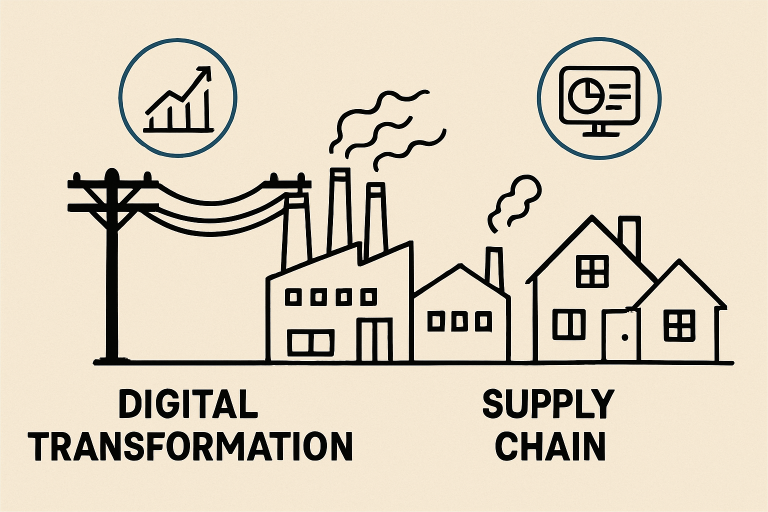
Embracing Digital Transformation
Digital transformation in utility supply chains is revolutionizing visibility, speed, and operational control. Adoption of AI, advanced analytics, IoT, and automated processes provides real-time data, risk prediction, and demand forecasting. This shift enables utilities to track assets throughout their lifecycle, allowing for rapid response to disruptions or emerging needs.
Enhanced transparency, enabled by digital tools, is being driven by events such as product recalls, supply chain disruptions, and a renewed focus on risk and compliance standards. As highlighted by Forbes, the need for visibility and traceability has never been greater, particularly with the increasing security and regulatory requirements in the utility sector.
The value of digital supply chains goes beyond technology for its own sake. For example, cloud-based procurement and inventory systems enable utilities to streamline asset management, accurately forecast part needs, and minimize understocking or overstocking events. These advancements reduce both overall costs and downtime, ensuring a seamless transition to a more resilient supply chain ecosystem.
Building Resilience Through Strategic Partnerships
The complex and interconnected nature of the modern utility sector highlights the importance of supplier relationships and collaboration. Establishing strong alliances with key suppliers ensures reliability, innovation, and timely access to critical materials—especially during global disruptions. Rather than viewing suppliers as interchangeable vendors, utilities now approach them as strategic partners.
Long-term contracts, co-investment in R&D, and shared sustainability initiatives are helping to make supply chains more flexible and robust. This collaborative environment fosters the exchange of critical information, drives innovation, and enables joint problem-solving during supply interruptions or market shifts.
Prioritizing Sustainability
The utility sector is increasingly held accountable for the environmental and social impact of its operations, including those of its suppliers. Factors such as carbon footprint reduction, fair labor practices, and responsible sourcing have become central to competitive differentiation and regulatory compliance. According to a comprehensive overview from McKinsey & Company, integrating ESG principles into procurement and distribution is a critical lever for the future of utility supply chains.
In practice, this means vetting suppliers for ethical sourcing, integrating environmental benchmarks into contracts, and seeking materials or technologies with lower embodied carbon. Stakeholder pressure—from regulators, customers, and investors—is pushing utilities to achieve greater transparency and measurable outcomes related to sustainability.
Enhancing Supply Chain Visibility
Accurate end-to-end visibility, made possible through digital innovation, is now the gold standard in utility supply chains. Real-time monitoring of assets, shipments, and supplier performance enables organizations to respond quickly and confidently to unexpected disruptions. AI-powered dashboards, predictive tools, and big data analytics turn complex data into actionable intelligence, enabling better risk management and more customer-focused outcomes.
In addition to responding faster to change, increased transparency facilitates compliance with evolving regulations and streamlines audits. By giving every stakeholder—from field technicians to senior leadership—access to the same data, organizations create a culture of shared responsibility and proactive decision-making.
Conclusion
The utility industry’s path forward lies in adapting supply chain strategies to meet the rising tide of technological innovation, customer expectations, and environmental responsibility. By embracing digital transformation, cultivating strategic partnerships, and integrating sustainability into every practice, utility companies can develop supply chains that are agile, transparent, and well-suited to the demands of tomorrow’s energy landscape. Forward-thinking utilities partner closely with trusted suppliers, invest in advanced solutions, and prioritize resiliency as a competitive advantage in the face of mounting industry pressures.