
The First Line of Defense in Home Security

Our homes are our safe spaces. But true peace of mind comes from knowing they are truly secure. In Victorville, CA, boosting home security means looking beyond just the front door. We understand that your garage door and overall perimeter play a massive role in keeping your family and belongings safe. This guide will explore practical ways to strengthen these often-overlooked areas. We’ll show you how smart fencing solutions, secure garage doors, and modern technology work together to enhance your security. Our goal is to help you build a strong, layered defense around your home, stopping threats before they even reach your doorstep.
Want to learn more about comprehensive home security strategies? Explore our main guide or contact us for personalized advice.
Home security is not a single lock or alarm; it’s a multi-layered approach designed to deter, detect, and delay potential threats. The perimeter of your property – including your fencing and garage door – forms the crucial outer shell of this defense. Think of it as the first line of defense, the initial barrier that discourages intruders and buys valuable time for internal security systems to react.
A well-secured perimeter provides multiple benefits. Firstly, it acts as a deterrent. Most burglars are opportunistic and will bypass properties that appear difficult to access. Visible security measures, such as sturdy fences, secure gates, and robust garage doors, send a clear message that your home is not an easy target. Secondly, it provides layered defense. Even if an intruder manages to breach one layer, they are immediately met with another, increasing the time and effort required to gain entry. This layered approach is far more effective than relying on a single point of protection. Finally, it contributes to crime deterrence in the broader community. When individual homes are well-secured, the overall appeal of a neighborhood to criminals diminishes.
Understanding where vulnerabilities lie and how to address them proactively is key. We will delve into how fortifying your boundary with adequate fencing, securing your garage door, and integrating smart technology can create a comprehensive and formidable home security strategy.
Fortifying Your Boundary: The Role of Fencing
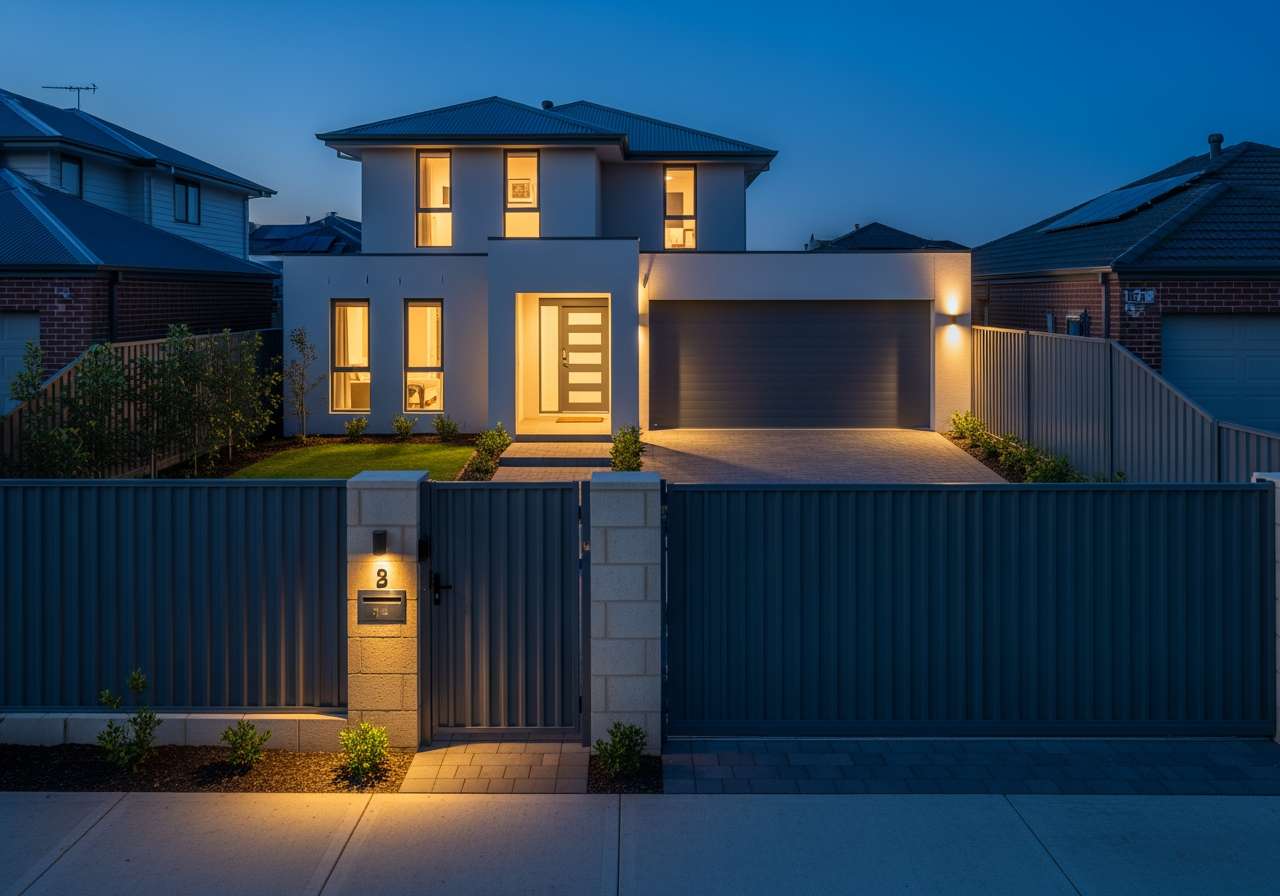
The perimeter of your property, often defined by its fencing, is the initial physical and psychological barrier against unauthorized access. A robust fence does more than mark property lines; it actively contributes to your home’s security by creating a clear boundary that deters casual trespassers and makes forced entry more challenging.
When considering fencing for security, several factors come into play. Fencing materials are paramount, with choices ranging from solid wood and vinyl to durable wrought iron and chain-link. Each material offers different levels of security, maintenance requirements, and aesthetic appeal. The height of the fence is another critical consideration. A taller fence naturally presents a greater obstacle to climbing, making it less attractive to potential intruders. However, local regulations and aesthetic preferences must also be considered.
Security gates are an extension of your fence and must be equally robust. A strong fence with a flimsy gate is a significant vulnerability. Gates should be constructed from durable materials, equipped with high-quality locks, and, ideally, integrated into your overall access control system. For improved protection, consider automated gates that can be controlled remotely and feature secure locking mechanisms.
Effective access control at your gates is essential. This can range from traditional deadbolt locks to more advanced keypads, smart locks, or even biometric systems for pedestrian gates. The goal is to ensure that only authorized individuals can enter your property, while providing a transparent barrier to those who are not. A professionally installed fence is a critical component, and consulting with experts in Montana Fence home security can ensure the right design and materials are chosen for your property. Their expertise can help you navigate local regulations, material selection, and best practices for installation to create a truly secure perimeter.

Enhancing Your Fence for Better Home Security
A fence, no matter how sturdy, can continually be improved to provide even greater security. Beyond the basic structure, several features can serve as additional deterrents, making your perimeter more formidable.
One effective strategy is to incorporate anti-climb features. These can include pointed fence toppers, thorny bushes planted along the fence line, or even specialized anti-climb spikes (where legal and appropriate). The aim is to make scaling the fence difficult, painful, and time-consuming, increasing the risk for an intruder.
Landscape integration can also play a significant role. Strategic planting of dense, thorny shrubs or trees along the fence line can create a natural, impenetrable barrier. This not only improves security but also adds to the aesthetic appeal of your property. However, it’s crucial to ensure that landscaping doesn’t create blind spots or provide cover for intruders. Keep shrubs trimmed below window level and trees pruned to prevent them from offering easy climbing access to upper floors.
Smart lighting is an often-underestimated security improvement. Motion-activated lights along your fence line and around gates can startle potential intruders, exposing them to view and deterring further action. These lights can also be integrated with your smart home system to illuminate specific areas when a sensor is triggered, or to simulate occupancy when you are away.
Ultimately, gate sensors play a crucial role in monitoring entry points. These sensors can detect when a gate is opened or tampered with, sending alerts to your security system and smartphone. Integrating these with your smart lighting can create an immediate, visible response to any unauthorized gate activity.
Common Fencing Materials and Their Security Benefits
Choosing the right fencing material involves striking a balance between security needs, aesthetic preferences, maintenance requirements, and budget. Each material offers distinct advantages and disadvantages when it comes to fortifying your home’s perimeter.
- Wood Fencing:
- Pros: Offers excellent privacy, can be built to significant heights, and provides a classic, natural aesthetic. It’s relatively affordable and customizable in terms of style and stain.
- Cons: Requires regular maintenance (staining, sealing, repairs) to prevent rot, warping, or insect damage. It can be climbed if not designed with anti-climb features. A determined intruder can cut through it.
- Vinyl Fencing:
- Pros: Low maintenance, highly durable, and resistant to rot, pests, and weathering. Offers good privacy and is available in various styles. It’s generally stronger than wood and more resistant to damage.
- Cons: Can be more expensive upfront than wood. While strong, it can crack or break under extreme impact. Less customizable in appearance once installed.
- Wrought Iron Fencing:
- Pros: Extremely strong and durable, offering a high level of security. Difficult to cut or break. Its open design allows for clear visibility of the property, which can be a deterrent in itself. Offers a sophisticated, neat aesthetic.
- Cons: High upfront cost. Requires occasional painting or powder coating to prevent rust. Does not offer privacy unless combined with other elements or dense landscaping. It can be climbed if not designed with pointed finials or other anti-climb features.
- Chain-Link Fencing:
- Pros: Very affordable, quick to install, and durable. Provides a clear boundary and can be pretty tall.
- Cons: Offers no privacy. Easy to climb, especially if not topped with barbed wire or other deterrents. It can be cut with specialized tools—primarily a visual deterrent rather than a physical barrier against determined intruders.
When making your choice, consider the primary threats you wish to address, your local climate, and the overall look you want for your property. A combination of materials might also be an effective strategy, such as a solid privacy fence in the backyard and decorative wrought iron at the front with robust security features.
The Modern Drawbridge: Securing Your Garage Door
While much attention is often given to front doors and windows, the garage door frequently remains a significant, yet overlooked, vulnerability in home security. For many homes, the garage door is the most significant and most accessible entry point, making it a prime target for intruders. Whether attached to the house or a detached structure, a compromised garage can grant access not only to vehicles and valuable tools but often directly into your living space.
Intruders may exploit weaknesses in garage doors through various methods, such as forcing the door open, bypassing traditional locking mechanisms, or even using universal remotes or code grabbers on older openers. Once inside the garage, they gain privacy and time to work on the entry door into the main house, which is often less secure than the front door.
Modern smart garage door openers have revolutionized garage security, changing this traditional weak point into a fortified and intelligent entry. These systems enable remote monitoring and control via smartphone apps, allowing you to check the door’s status from anywhere, open or close it remotely, and receive instant alerts if it’s left open or accessed unexpectedly. This remote monitoring capability is invaluable for peace of mind, especially when you’re away from home or simply busy inside.
Beyond smart technology, regular maintenance of your garage door system is paramount. A well-maintained door operates smoothly, quietly, and reliably, reducing the chances of mechanical failure that could leave it vulnerable. This includes inspecting springs, cables, rollers, and the opener mechanism, as well as ensuring that all safety features are functioning correctly. Neglecting maintenance can lead to a noisy, unreliable door that is easier to force open or that fails to close securely.

Key Components for a Secure Garage
To truly secure your garage, a multifaceted approach that combines both physical security and smart technology is essential.
Firstly, reinforced garage doors provide a robust physical barrier. Look for doors made from durable materials, such as steel or heavy-gauge aluminum, often with multiple layers or insulation that enhance their rigidity. Impact-resistant panels and strong track systems further improve their ability to withstand forced entry attempts. Upgrading an older, flimsy door can significantly improve your garage’s overall security profile.
Secondly, integrating smart locks on the entry door from the garage to your home adds a critical layer of protection. These locks can be controlled remotely, ensuring that even if the garage itself is breached, access to your living space remains secure. Features like automatic locking, unique access codes for different users, and activity logs provide granular control and monitoring.
Thirdly, motion-activated lights are highly effective deterrents. Installing bright, motion-sensing lights both inside and outside the garage can startle intruders, expose their presence, and make them feel vulnerable. These lights can also be linked to your smart home system, triggering alerts or recording video when activated.
These components must be installed and maintained correctly, which is why many homeowners rely on garage door security experts for peace of mind. Their expertise ensures that all elements of your garage security system are properly integrated, functioning optimally, and providing the maximum possible protection against potential threats. They can also advise on the best products and practices for your specific garage setup.
Upgrading Your Garage for Improved Home Security
Beyond the foundational components, several upgrades can significantly improve your garage’s security and integrate it seamlessly into your smart home ecosystem.
One of the most critical upgrades for any garage door opener is a backup battery. Power outages can render even the most advanced smart opener inoperable, leaving your garage vulnerable to potential security risks. A backup battery ensures that your garage door can still be opened and closed electronically in the event of a power loss, maintaining your security and convenience. Many modern smart openers come with this feature built-in, or it can be added as an accessory.
Remote access control is a hallmark of smart garage technology. Through a smartphone app, you can monitor the door’s status, open or close it from anywhere, and receive real-time notifications for any activity. This means you’ll never again have to wonder if you left the garage door open, and you can grant temporary access to trusted individuals, such as delivery services or maintenance personnel, without sharing physical keys or codes. Some systems even integrate with your vehicle’s infotainment system for automatic opening and closing as you approach or leave home.
For comprehensive protection, integration with alarm systems is key. Your smart garage door opener can be linked to your central home security system, so if the garage door is opened unexpectedly, it can trigger your home alarm, activate cameras, and send immediate alerts to your monitoring service or smartphone. This unified approach ensures that all entry points are protected under a single, cohesive security umbrella.
Finally, consider adding video surveillance specifically for your garage. A dedicated camera, especially one with motion detection and two-way audio, can provide visual verification of any activity. You can see who is entering or exiting, capture footage of suspicious events, and even speak to individuals in your garage remotely. This visual evidence is invaluable for identification and prosecution in the event of a security incident.
Integrating Technology for a Smarter Perimeter
Advancements in technology have profoundly shaped the evolution of home security. Modern security systems move beyond simple alarms, leveraging interconnected devices and intelligent software to create a comprehensive and responsive defense. At the heart of this integration are both wireless systems and wired systems, each offering distinct advantages.
Wireless systems have become increasingly popular due to their ease of installation and flexibility. Components communicate via Wi-Fi, Z-Wave, Zigbee, or other radio frequencies, making them ideal for existing homes where running new cables might be impractical. They offer modularity, allowing homeowners to add or relocate sensors and cameras as needed easily. However, they rely on battery power for sensors and a strong Wi-Fi signal, which can be a consideration for reliability.
Wired systems, conversely, offer unparalleled reliability and are less susceptible to signal interference or battery failure. They are typically installed during new construction or significant renovations, as they require physical cabling to connect all components to a central control panel. While more complex to install, wired systems often provide a more robust and tamper-resistant solution, as wires are concealed within walls.
Regardless of the connectivity method, the true power of modern security lies in AI technology and smart sensors. Artificial intelligence is transforming the operation of security cameras and motion sensors, enabling them to distinguish between regular activity (such as pets or passing cars) and genuine threats (like human intruders). This reduces false alarms and ensures that alerts are more accurate and actionable. Smart sensors, meanwhile, go beyond simple contact detection, offering capabilities like glass-break detection, environmental monitoring for floods or fires, and sophisticated motion analysis.
Smart Cameras and Sensors
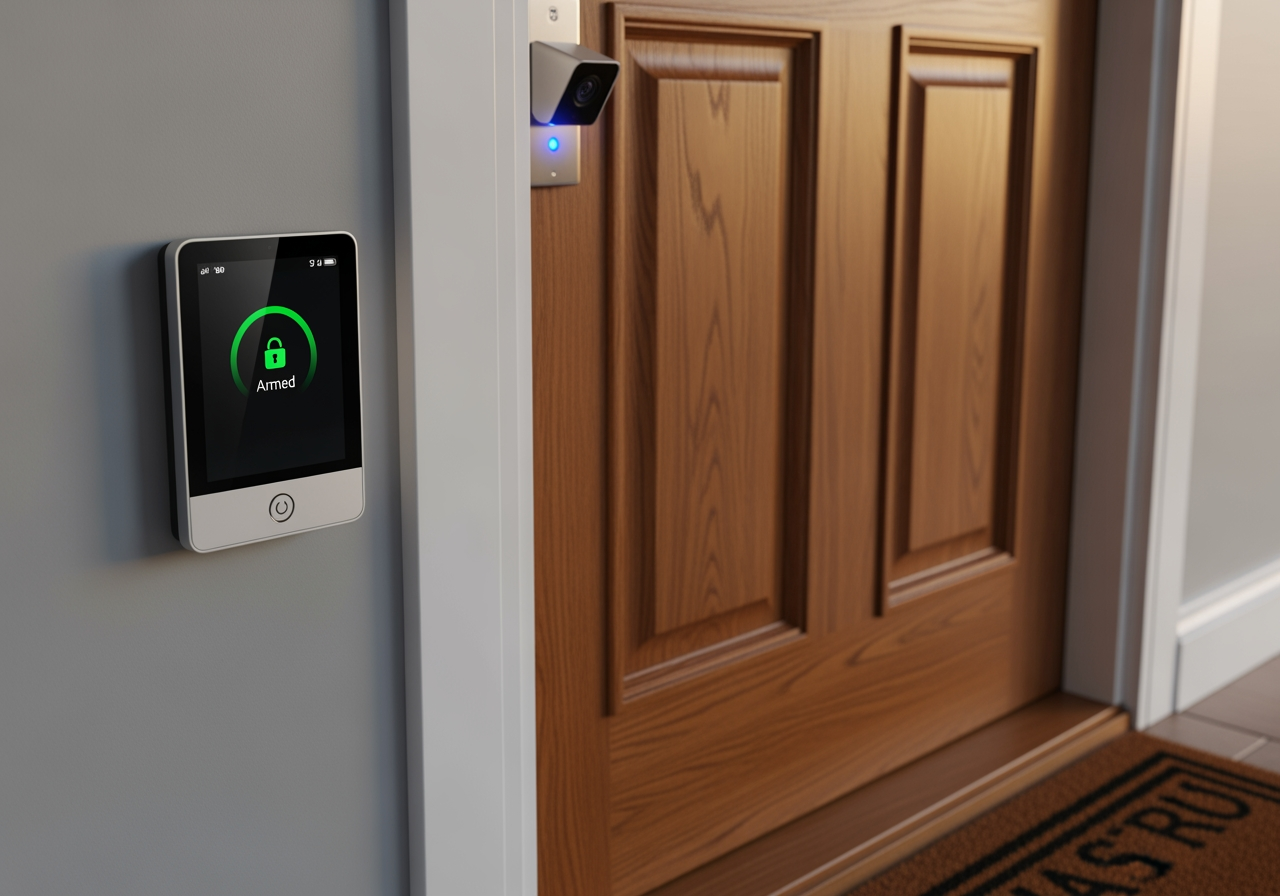
Smart cameras and sensors are the eyes and ears of a modern perimeter security system, providing critical awareness and real-time alerts.
Motion detection is a fundamental feature in smart cameras and sensors. Advanced systems utilize AI to distinguish between humans, animals, and vehicles, thereby significantly reducing false alarms. When motion is detected in a designated zone, cameras can begin recording, lights can activate, and you can receive instant notifications on your smartphone.
Video doorbells are a prime example of smart technology enhancing perimeter security. These devices enable you to see, hear, and speak with visitors at your door from anywhere, even when you’re not home. They typically include motion detection, night vision, and two-way audio, enabling you to screen visitors, deter package thieves, and capture video evidence of anyone approaching your entrance. Some even offer facial recognition to identify familiar faces.
Glass break sensors provide an essential layer of defense for windows and glass doors. Unlike contact sensors that detect when a window is opened, glass break sensors listen for the specific acoustic frequency of shattering glass. This means an alarm can be triggered even if an intruder attempts to break a window without opening it, providing early detection of a forced entry attempt.
Beyond traditional security, environmental sensors offer comprehensive protection for your home. These include:
- Smoke and Carbon Monoxide Detectors: Smart versions can integrate with your security system, sending alerts to your phone and even dispatching emergency services if dangerous levels are detected.
- Water Leak Detectors: Placed near water heaters, washing machines, or in basements, these sensors can detect leaks early, preventing costly water damage.
- Temperature Sensors: Can alert you to extreme temperature drops that could lead to frozen pipes, or unusual heat spikes that might indicate a fire risk.

Common Types of Home Security Sensors and Their Functions:
- Door/Window Contact Sensors: Detect when a door or window is opened or closed.
- Motion Sensors: Detect movement within a specified area, often using passive infrared (PIR) technology.
- Glass Break Sensors: Detect the sound frequencies of shattering glass.
- Video Doorbells: Combine a camera, microphone, speaker, and doorbell button for remote visitor interaction and monitoring.
- Security Cameras: Offer visual surveillance, often equipped with features such as night vision, two-way audio, and AI-powered analytics.
- Smoke Detectors: Detect the presence of smoke, indicating a potential fire.
- Carbon Monoxide Detectors: Detect the presence of the odorless, colorless, and poisonous carbon monoxide gas.
- Water Leak/Flood Sensors: Detect the presence of water, alerting to leaks or floods.
- Temperature Sensors: Monitor ambient temperature, often used to prevent freezing pipes or detect HVAC issues.
- Panic Buttons: Manually trigger an alarm and alert emergency services.
The Importance of Data Privacy
As our homes become smarter and more connected, the issue of data privacy becomes increasingly critical. Smart home security systems collect and transmit a wealth of personal data, including video footage, audio recordings, activity logs, and even biometric information. Protecting this data from unauthorized access and misuse is just as important as protecting your physical property.
Wi-Fi security forms the foundation of your smart home’s digital defense. Your home network is the conduit through which all your smart devices communicate. Ensuring your Wi-Fi network is secured with strong encryption (WPA2 or WPA3), a complex and unique password, and a hidden SSID (network name) is crucial. Regularly changing your Wi-Fi password and separating your smart devices onto a guest network can add an extra layer of protection.
Strong passwords are your first line of defense against unauthorized access to individual devices and accounts. Avoid easily guessable passwords, use a combination of uppercase and lowercase letters, numbers, and symbols, and never reuse passwords across different services. A password manager can help you manage complex passwords securely.
Two-factor authentication (2FA) should be enabled wherever possible. This adds an extra layer of security by requiring a second form of verification (like a code sent to your phone) in addition to your password, making it much harder for unauthorized users to access your accounts even if they somehow obtain your password.
Regular software updates are crucial. Device manufacturers frequently release updates that patch security vulnerabilities. Ignoring these updates leaves your devices exposed to known exploits. Always ensure your smart cameras, sensors, and central hubs are running the latest firmware.
Finally, understanding data encryption is essential. Reputable security systems encrypt data both in transit (when it’s sent from your device to the cloud) and at rest (when it’s stored on servers). This encryption scrambles your data, making it unreadable to anyone without the proper decryption key, even if they manage to intercept it. Always choose security providers that prioritize robust encryption protocols.
Frequently Asked Questions About Perimeter Security
How Can Smart Lighting Improve My Home’s Perimeter Security?
Smart lighting provides a dynamic and intelligent way to enhance your home’s perimeter security, surpassing the limitations of simple on/off switches. One of its primary benefits is the ability to simulate occupancy. You can schedule lights in various rooms, including exterior lights, to turn on and off at irregular intervals, creating the illusion that someone is home even when you’re away. This makes your property appear less appealing to opportunistic intruders who often scout homes for signs of vacancy.
Beyond scheduled routines, smart lighting can be triggered by motion sensors. When an intruder approaches your property or crosses a designated zone, strategically placed motion-activated lights can instantly illuminate dark areas. This sudden burst of light can startle and disorient a potential intruder, exposing them to view and making them feel vulnerable. This immediate, visible response often acts as a strong deterrent, causing them to flee.
Furthermore, smart lighting can be integrated with your broader home security system. Suppose a perimeter sensor (like a gate sensor or outdoor camera) detects unusual activity. In that case, your smart lights can automatically flash or change color, signaling a potential issue and drawing attention to your property. This integration creates a cohesive and responsive defense system that works proactively to deter threats.
What Is the Difference Between DIY and Professionally Installed Security Systems?
The choice between a DIY (Do-It-Yourself) and a professionally installed security system largely depends on your budget, technical comfort, and specific security needs.
DIY systems offer significant flexibility and are often more budget-friendly in terms of upfront costs. They are designed for easy self-installation, typically involving wireless components that can be set up and configured using a smartphone app. This approach is ideal for renters who need portable systems or homeowners who enjoy hands-on projects and want full control over their system’s components and settings. DIY systems often come with no-contract monitoring options, allowing you to choose between self-monitoring (receiving alerts directly to your phone) or subscribing to professional monitoring services on a month-to-month basis. While they save on installation fees, the responsibility for proper placement, troubleshooting, and maintenance falls squarely on the homeowner.
Professionally installed systems, on the other hand, ensure optimal device placement and integration. A trained technician will assess your property’s unique vulnerabilities, recommend the most effective components, and install everything to industry standards. This guarantees that sensors are strategically positioned, cameras have optimal viewing angles, and all components communicate seamlessly. Professionally installed systems often include 24/7 monitoring services as part of a contract, where a central station monitors your alarms and dispatches emergency services if needed. While they typically involve higher upfront costs and often require a long-term contract, they offer peace of mind through expert installation, comprehensive support, and rapid emergency response, making them a strong choice for those seeking a hands-off, robust solution.
How Do Professional Monitoring Services Work?
Professional monitoring services provide an invaluable layer of protection by ensuring your home is watched over 24/7, even when you’re unable to respond to alerts yourself.
Here’s how it typically works:
- Alarm Triggered: When a sensor in your home security system detects an event—such as a door opening unexpectedly, motion in a restricted area, a glass break, or a smoke alarm activating—it sends a signal to your central control panel.
- Signal to Monitoring Center: The control panel then transmits this alarm signal, usually via a cellular connection (which is more reliable than Wi-Fi or landline and less susceptible to tampering), to a remote professional monitoring center.
- Agent Alerted: At the monitoring center, trained agents are instantly alerted to the alarm and the specific type of event (e.g., “front door opened,” “motion detected in living room,” “smoke alarm”).
- Verification (Optional but Recommended): Depending on your system and monitoring plan, the agent may attempt to verify the alarm. This could involve calling your home or designated contact numbers, or, with advanced systems, using video verification (if you have cameras) to confirm the emergency visually. This step helps to reduce false alarms.
- Emergency Dispatch: If the alarm is verified, or if they cannot reach you, the agent will immediately dispatch the appropriate emergency services—police, fire department, or medical personnel—to your address. They will provide critical information about the nature of the emergency, potentially speeding up response times.
- Notification to Contacts: Simultaneously, the monitoring center will notify you and your designated emergency contacts about the situation and the actions taken.
The benefits of professional monitoring are significant. It provides continuous oversight, ensuring that even if you’re asleep, at work, or on vacation, someone is always ready to respond to an emergency. This rapid response can be crucial in mitigating damage, apprehending intruders, or saving lives.
Conclusion: A Unified Approach to a Safer Home
Securing your home effectively in today’s world requires a comprehensive strategy that extends beyond the traditional front door lock. By focusing on your property’s perimeter – specifically robust fencing and a fortified garage door – and integrating these with cutting-edge smart technology, you create a robust, multi-layered defense.
We’ve explored how a well-designed fence, improved with anti-climb features and bright lighting, forms your first physical deterrent. We’ve also highlighted the critical role of your garage door, often an overlooked vulnerability, and how smart openers, reinforced doors, and integrated surveillance can transform it into a secure entry point.
The integration of AI-powered cameras, smart sensors, and remote monitoring through mobile apps brings these physical barriers to life, providing real-time awareness and proactive protection. However, with this technological advancement comes the crucial responsibility of safeguarding your digital privacy through strong Wi-Fi security, robust passwords, and diligent software updates.
A unified approach to home security provides not just physical protection but also invaluable peace of mind. By embracing evolving technology and adopting proactive measures, we can ensure our homes remain safe havens for ourselves and our families, stopping threats before they even have a chance to reach our doorstep.