
Key Takeaways
- Utilizing recycled materials in pavement construction reduces environmental impact and conserves resources.
- Advanced technologies like warm-mix asphalt (WMA) improve pavement performance and sustainability.
- Permeable pavements offer effective stormwater management and reduce urban heat island effects.
- Long-life pavement designs minimize maintenance needs and extend service life.
Table of Contents
- Recycled Materials in Pavement Construction
- Warm-Mix Asphalt Technology
- Permeable Pavements for Stormwater Management
- Long-Life Pavement Designs
- Innovative Materials Enhancing Durability
- Digital Twin Technology in Pavement Maintenance
- Energy-Efficient Construction Techniques
- Conclusion
Sustainable road infrastructure is foundational to urban planning and economic growth, with modern techniques increasingly focusing on environmental responsibility and durability. Adopting advanced approaches ensures roads and pavements not only withstand heavy use but also conserve resources for future generations. Paving with 30+ years of experience, experts recognize the need to integrate innovative solutions that preserve our environment while extending the lifespan of pavement surfaces.
Contemporary pavement construction is evolving, combining traditional methods with new technologies that reduce environmental impact and deliver long-term value. Policies and emerging materials are shifting industry standards, highlighting the potential to create infrastructure that is both functional and ecologically sound. Early adoption of such measures can lead to significant economic and operational benefits for municipalities and private developers alike.
Increased awareness about sustainable road design is pushing the sector to rethink how roads are built, maintained, and upgraded. Emphasizing greener materials, energy-efficient processes, and smarter designs is setting new benchmarks for the construction industry. According to the American Chemical Society, innovative road construction strategies are rapidly gaining traction for their ability to tackle pressing environmental challenges.
Recycled Materials in Pavement Construction
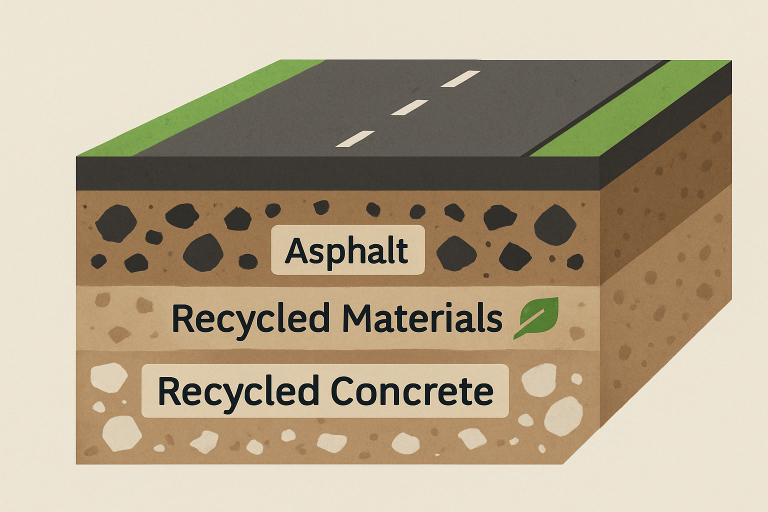
The use of recycled materials is a cornerstone of green road construction. Incorporating products such as reclaimed asphalt pavement (RAP) and recycled concrete aggregate helps reduce waste, conserve natural resources, and lower the carbon footprint of new projects. By substituting traditional aggregates with recycled alternatives, contractors can achieve superior road performance with added sustainability. For instance, studies have demonstrated that RAP improves both structural integrity and moisture resistance, extending the service life of road surfaces and minimizing landfill deposition.
Other waste materials—like rubber from old tires and even waste cooking oil—are also being incorporated into pavement mixes. These innovations help address both the problem of solid waste disposal and the high environmental cost associated with extracting and processing virgin materials. As regulations and public expectations continue to align, recycling in pavement construction is expected to accelerate, supporting the global push toward more sustainable infrastructure.
Warm-Mix Asphalt Technology
Warm-mix asphalt (WMA) represents a leap forward in sustainable road surfacing. By lowering the temperature required to produce and lay asphalt, WMA reduces fuel consumption and cuts harmful emissions. This technology enables better compaction, even in cool weather, resulting in pavements that last longer with fewer repairs. Contractors using WMA are not only improving worksite safety by reducing fumes but also slashing their carbon footprint by up to 30 percent compared to conventional hot-mix asphalt. According to the U.S. Environmental Protection Agency, WMA is proving to be a cost-effective and practical choice for green infrastructure.
Permeable Pavements for Stormwater Management
Stormwater runoff poses a significant challenge in urban settings, leading to flooding, pollution, and strain on municipal drainage systems. Permeable pavements address these issues by allowing rainwater to filter through the surface, naturally recharging groundwater and mitigating flood risk. These surfaces, which include porous asphalt, permeable concrete, and interlocking pavers, are particularly valuable in areas prone to heavy rainfall. Not only do they support sustainable urban drainage systems, but they also help reduce urban heat island effects by improving water evaporation and cooling city streets.
Long-Life Pavement Designs
Investing in pavements designed for a service life of 40 to 60 years pays dividends in reduced maintenance costs and resource use. Long-life pavement designs focus on durable materials and robust base structures that withstand heavy traffic and environmental stressors. These roads often require only surface renewal or minor treatments rather than complete reconstruction throughout their lifespans. By prioritizing resilience and quality, cities and provinces can enjoy significant savings and reduced environmental disruption over the long term.
Innovative Materials Enhancing Durability
Cutting-edge advancements in materials science are enabling even greater sustainability gains. Materials like Neoloy Geocells reinforce soil, distribute loads more efficiently, and offer stabilization for weak substrates. Such products allow construction on marginal ground, reduce the need for thick road layers, and ultimately improve pavement durability and performance. Polymer-modified asphalts and fiber-reinforced materials are also entering mainstream use, pushing the envelope of longevity and weather resistance.
Digital Twin Technology in Pavement Maintenance
Digital twin technology is revolutionizing how we maintain road networks. By creating dynamic, real-time virtual models of roads and bridges, engineers can monitor structural health, predict maintenance needs, and optimize repair schedules. These data-driven insights not only improve asset management but also reduce long-term ownership costs by catching problems early. The combination of sensors, analytics, and visualization tools enables a shift from reactive to predictive maintenance—a critical evolution for sustainable city planning.
Energy-Efficient Construction Techniques
On-site energy efficiency is another pillar of sustainable paving. Methods such as intelligent compaction use advanced sensors to optimize density and uniformity, reducing wasted labor and rework. Switching to alternative fuels and electrified machinery further reduces emissions associated with construction activities. Emphasizing process efficiency across every project phase is crucial to minimizing environmental impact and improving the social license for pavement construction.
Conclusion
The shift toward sustainable pavement construction and maintenance practices is reshaping the industry. By blending recycled materials, advanced technologies, and resilient designs, today’s roadways can deliver both outstanding performance and environmental stewardship. Focusing on long-term strategies ensures that future generations inherit infrastructure that is not only robust and cost-effective but also mindful of their ecological legacy.