
Key Takeaways
- Regular inspections help identify areas needing attention.
- Soft washing is ideal for delicate surfaces like siding and roofs.
- Pressure washing effectively cleans high-traffic areas.
- Gutter and window maintenance prevent water damage and improve aesthetics.
- Establishing a seasonal cleaning routine ensures consistent upkeep.
Table of Contents
- Inspect and Plan
- Soft Wash Siding and Roof
- Pressure Wash High-Traffic Surfaces
- Gutter and Window Cleaning
- Set a Seasonal Routine
- Conclusion
The exterior of your property is the first impression guests and passersby receive. Keeping it clean and well-maintained not only boosts curb appeal but also helps protect your investment from preventable wear and tear. Consistent maintenance routines will preserve your property’s value and present a welcoming face to the world. For businesses, exterior commercial washing keeps facilities looking professional and prolongs the life of key surfaces.
Environmental factors such as pollen, mold, dirt, and algae can take a toll on exteriors over time, leading to costly repairs if left unaddressed. Developing a comprehensive cleaning strategy ensures you’re not only keeping your property attractive but also reducing long-term maintenance costs. These best practices for exterior cleaning maintenance will help you stay on top of maintenance year-round.
Inspect and Plan
The first step in exterior cleaning maintenance is to thoroughly inspect your property. Walk around the structure and note any areas where dirt, mildew, or algae are becoming visible. Pay close attention to shaded and damp spots, as these harbor the most growth. Inspect not just the siding, but also the roof, gutters, windows, decks, and walkways for buildup. Document the problem areas and prioritize locations that impact safety and aesthetics. Planning allows you to gather the necessary cleaning supplies and make a checklist to tackle tasks methodically rather than sporadically. Regular inspection, especially after storms or seasonal changes, helps catch minor issues before they become significant problems. If your property includes a residence, professional exterior home cleaning can provide specialized treatments to keep your surfaces spotless and structurally sound.
Soft Wash Siding and Roof
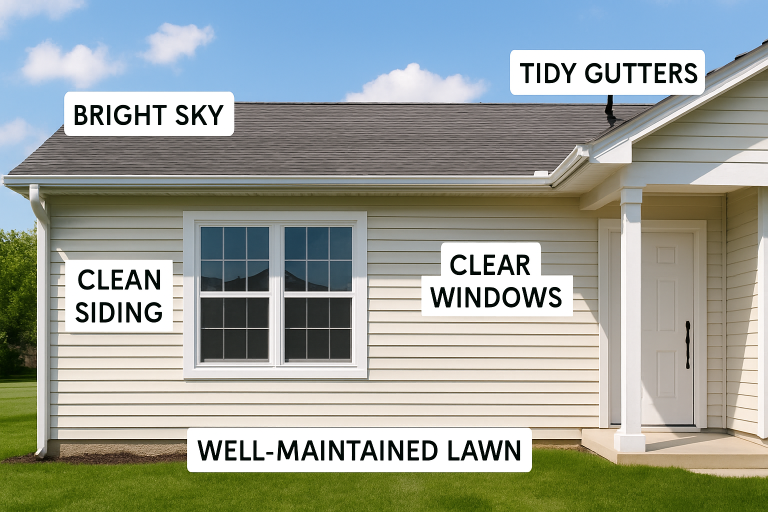
Soft washing is the preferred method for cleaning delicate surfaces, such as vinyl siding, painted wood, or asphalt shingles; high-pressure streams may damage them. This technique utilizes low-pressure water combined with biodegradable cleaning solutions that safely lift dirt, algae, and mold. It is effective at maintaining your property’s appearance without causing etching or water intrusion. Conduct soft washing at least once a year, or when significant discoloration or streaking is visible. Always test cleaning products on a small, inconspicuous area to ensure they won’t damage the material. If you notice persistent mold or lichen, consider a specialized solution and rinse thoroughly.
Benefits of Soft Washing
- Protects vinyl and painted surfaces from cracking or fading.
- Extends roof shingle lifespan by removing harmful organic growth.
- Reduces the need for frequent repainting or re-roofing.
Soft washing is especially important because untreated algae and mold can retain moisture, leading to rot or the breakdown of building materials.
Pressure Wash High-Traffic Surfaces
Driveways, sidewalks, patios, and entryways weather daily foot traffic, spilled drinks, chewing gum, and the occasional oil stain from vehicles. Over time, grime can calcify, making these surfaces hazardous or unsightly. Pressure washing uses a strong water stream to break up and remove debris from concrete, brick, stone, or composite surfaces. It’s best to pressure wash these areas once or twice a year, or as needed based on local conditions. Early spring and late fall are prime times to remove winter salt, leaf stains, and built-up grime before new seasonal messes accumulate.
Safety and Surface Care
- Use the appropriate nozzle tip for each surface to prevent chipping.
- Test a small spot first to avoid accidental damage.
- Consider sealing driveways and patios after cleaning to reduce future buildup.
Gutter and Window Cleaning
Gutters are designed to direct rainwater away from your foundation. Over time, leaves, twigs, and sediment can clog gutters, resulting in overflow and potential water damage to siding, walkways, and landscaping. Clean gutters at least twice a year, ideally in spring and fall, to ensure proper drainage and prevent ice dams in colder climates. Similarly, clean windows make a home or business feel brighter and more inviting. Debris or hard-water stains from rain can quickly accumulate and cause minor scratching or degradation of window panes if left unattended.
Professional Tips
- Use gutter guards to limit debris buildup between cleanings.
- Utilize soft-bristled squeegees and microfiber cloths for streak-free windows.
- Check window seals and screens during cleaning for signs of wear.
Set a Seasonal Routine
Establishing a cleaning calendar will keep you on track and prevent buildup from becoming overwhelming. Start with a full-property clean in spring to remove pollen, mold, and winter debris. In summer, focus on patios, decks, and outdoor furniture to create a welcoming environment for guests.
Fall is the ideal time to tackle gutter cleaning, leaf removal, and window washing, ensuring everything is secure before winter sets in. In the colder months, inspect for cracks and seal exposed surfaces to guard against freeze-thaw damage and protect your outdoor features from the elements.
Routine Checklist
- Spring: Siding, roof, and window washing; gutter check.
- Summer: Driveway, patio, and exterior furniture cleans.
- Fall: Gutter clearing, leaf removal, seal cracks, window cleaning.
- Winter: Cover outdoor furnishings, monitor for ice or snow buildup.
By sticking to a seasonal schedule and addressing issues promptly, you can extend the lifespan of your exterior surfaces and enjoy a pristine property year-round.
Thorough exterior cleaning and maintenance are essential investments for both commercial and residential properties. With regular inspection, proper cleaning techniques, and a seasonal routine, you’ll prevent costly repairs, maintain property value, and create a welcoming atmosphere for visitors and occupants alike.
Conclusion
Maintaining a pristine exterior is an ongoing commitment that pays dividends in both structural longevity and curb appeal. By moving beyond simple aesthetics and embracing a systematic approach—utilizing soft washing for delicate shingles and pressure washing for rugged concrete—you effectively neutralize the environmental threats of mold, algae, and grime before they can cause permanent damage. This proactive strategy does more than make a home or business look professional; it creates a protective barrier that safeguards your investment against the elements. Ultimately, the key to success lies in the transition from reactive repairs to a consistent seasonal routine. From clearing gutters in the fall to refreshing siding in the spring, these small, scheduled actions prevent the accumulation of debris that leads to costly moisture intrusion and surface degradation. By treating exterior maintenance as an essential form of property insurance, you ensure that your building remains a safe, attractive, and high-value asset for decades to come.