
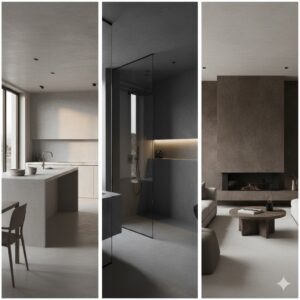
Microcement is one of the most versatile and contemporary materials in the world of interior design. Its ability to seamlessly cover a range of surfaces—from floors and walls to countertops—makes it an ideal choice for a variety of spaces. Whether you’re renovating a kitchen, bathroom, or living area, incorporating microcement design can lend your home a sleek, modern, and highly functional aesthetic. Below, we explore how microcement can transform these key areas, offering tips and ideas for achieving a refined and contemporary look.
What is Microcement?
Microcement, often referred to as polished concrete or cement-based coating, is a thin layer of cementitious material that can be applied over existing surfaces such as tile, plaster, or wood. Its smooth finish and adaptability make it a popular choice for homeowners looking to create a minimalist, seamless design. Microcement is not only durable but also resistant to water, stains, and scratches, making it an excellent material for high-traffic and moisture-prone areas such as kitchens and bathrooms.
Microcement Design for Kitchens
The kitchen is often considered the heart of the home, and its design plays a significant role in both the functionality and aesthetics of a space. Microcement offers a wide range of possibilities to enhance the kitchen’s look while providing long-lasting durability.
Sleek Countertops and Backsplashes
One of the standout features of microcement design is its ability to create smooth, continuous surfaces. This makes it ideal for countertops, where a seamless look can elevate the kitchen’s overall appearance. Microcement countertops are not only visually striking but also highly practical, offering a non-porous surface that resists stains and is easy to maintain.
When combined with microcement backsplashes, the material creates a uniform and contemporary look that eliminates the need for grout lines. Microcement backsplashes can be customized with various finishes, from matte to glossy, to suit different design preferences. Additionally, the minimalist nature of the material pairs well with both traditional and modern kitchen styles, ensuring versatility in design.
Microcement Flooring
For kitchen flooring, microcement is a fantastic option due to its durability and low-maintenance qualities. The thin layer of microcement can be applied over existing floors, which means you can transform old or worn-out floors without the need for a complete overhaul. Its resistance to scratches and stains makes it ideal for high-traffic areas, such as kitchens, where spills and heavy foot traffic are common.
The seamless nature of microcement floors contributes to an open, clean, and modern aesthetic, and because it’s highly customizable, it can be adapted to complement any color palette or design style. Whether you’re aiming for a sleek, industrial look or a more neutral, earthy tone, microcement flooring can be tailored to fit your vision.
Microcement Design for Bathrooms
Bathrooms, like kitchens, require materials that can withstand moisture and humidity. Microcement design provides a practical yet stylish solution for this high-moisture environment. From wet rooms to feature walls, microcement can transform your bathroom into a luxurious, spa-like retreat.
Wall Finishes
In bathrooms, microcement is most often used for walls, especially in wet areas such as showers or around bathtubs. The material’s water-resistant properties make it an ideal choice for these areas, preventing the buildup of mold and mildew. Microcement can be applied to create stunning feature walls or entire room designs, with the ability to blend different textures and finishes for added depth and interest.
Whether you choose to use microcement on all the walls in the bathroom or just as an accent, its versatility in color and finish allows you to customize the design to fit your style. For a clean, minimalist look, opt for neutral shades like light gray or white. For a more dramatic effect, rich tones like charcoal or earthy browns can add warmth and depth to the space.
Seamless Showers
A seamless microcement shower can be a beautiful and practical addition to a modern bathroom. The absence of grout lines not only creates a more cohesive and stylish design but also reduces the risk of mold and mildew buildup. Microcement is easy to clean and maintain, making it a popular choice for shower walls and floors. It also offers the flexibility to create custom shapes and layouts, allowing for a more personalized shower experience.
In addition to the aesthetic appeal, microcement showers provide a smooth surface that is slip-resistant when treated with a specific finish. This safety feature is particularly important in wet areas, ensuring a safe and functional design.
Microcement Design for Living Spaces
Living spaces, such as lounges, dining rooms, and entryways, can benefit greatly from microcement design due to its ability to create a cohesive, open-concept atmosphere. This material can be used on floors, walls, and even as decorative finishes on furniture or feature walls.
Feature Walls
Microcement is an excellent choice for creating feature walls in living spaces. Whether you’re looking to add texture to a modern living room or create a sophisticated backdrop in a dining area, microcement can be applied in a variety of ways to achieve different effects. Textured finishes can add depth to the space, while smoother, polished options can help create a sleek, refined look.
Microcement can be applied in custom patterns, including linear designs, geometric shapes, or natural stone-like textures, depending on your design goals. It’s a highly adaptable material, allowing it to seamlessly fit into both contemporary and more traditional living room settings.
Microcement Floors in Living Areas
Microcement flooring can also be a stylish and durable option for living areas. The seamless finish is perfect for open-plan spaces, as it provides a visually uninterrupted flow from one room to another. Microcement floors are available in a range of shades, from light neutrals to darker tones, which makes it easy to coordinate with existing furnishings or decor.
In addition to aesthetics, microcement flooring is known for its durability and resilience. Its resistance to wear and tear makes it a practical choice for high-traffic areas, while its easy maintenance means you won’t have to worry about constant upkeep.
Microcement as a Decorative Element
Beyond walls and floors, microcement can be used creatively in living spaces as a decorative material. For example, you might choose to apply microcement to furniture such as coffee tables, side tables, or even fireplaces. This unique design element adds a sculptural quality to furniture pieces, elevating their aesthetic appeal.
By using microcement as a decorative finish, you can create a sense of harmony and consistency throughout your living spaces, tying together different design elements in a cohesive way.
Benefits of Microcement Design in Various Spaces
There are several reasons why microcement is gaining popularity as a choice for home design, particularly in kitchens, bathrooms, and living spaces.
- Versatility: As discussed, microcement can be used across a range of surfaces—floors, walls, countertops, and even furniture. Its flexibility in application makes it suitable for different spaces and design preferences.
- Durability: Microcement is highly durable, resistant to cracking, scratching, and staining, making it ideal for high-use areas like kitchens and bathrooms.
- Low Maintenance: Unlike traditional materials such as tiles or stone, microcement is relatively easy to maintain. It can be cleaned with a damp cloth and doesn’t require heavy scrubbing or sealing over time.
- Seamless Design: Microcement’s ability to create smooth, uninterrupted surfaces eliminates grout lines, which not only enhances the design but also makes cleaning easier.
Conclusion
Microcement design is a powerful tool for achieving a modern, stylish, and functional look across a range of spaces, including kitchens, bathrooms, and living areas. Its versatility allows homeowners to create cohesive, durable, and aesthetically pleasing interiors that are both practical and visually appealing. Whether used on walls, floors, countertops, or as a decorative element, microcement offers a timeless design solution that can enhance any home. If you’re looking to create a space that is both contemporary and low-maintenance, microcement is a material worth considering.