Exploring Concrete Pool Deck Finishes and Styles
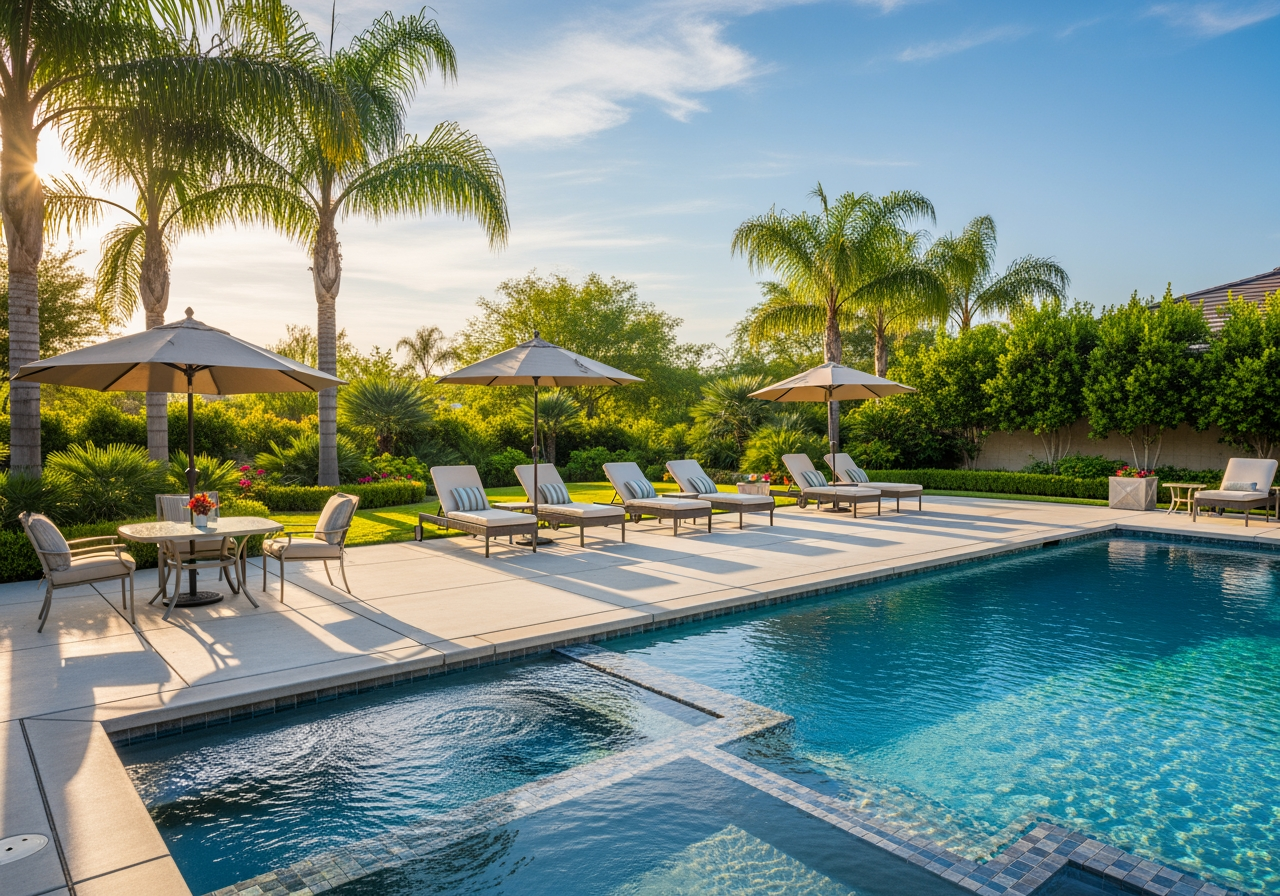 Imagine your perfect backyard. A sparkling pool, warm sun, and a beautiful space to relax. The concrete pool deck is often the centerpiece of this outdoor oasis. It’s where memories are made.
Concrete has a long history, dating back thousands of years. Today, it’s a popular choice for pool decks. This is due to its impressive durability, versatility, and cost-effectiveness. We understand you want a deck that looks great and lasts.
Choosing the right pool deck material is a big decision. We aim to help you evaluate if a concrete pool deck is right for your home.
In this extensive guide, we will cover everything. We’ll explore the different types of concrete pool decks and their cost differences. We’ll weigh the pros and cons of choosing concrete. You will also learn about maintenance requirements and exciting customization options for color and texture. We’ll even discuss how concrete compares to other materials.
One of the most appealing aspects of concrete pool decks is their incredible design flexibility. Unlike many other materials, concrete can be customized in terms of surface texture, color, and pattern, allowing you to create a pool deck that perfectly complements your home’s aesthetic while prioritizing safety. The right finish can transform a simple concrete slab into a stunning, functional extension of your living space.
Let’s dig into the popular concrete finishes available for pool decks:
Broom Finish Concrete
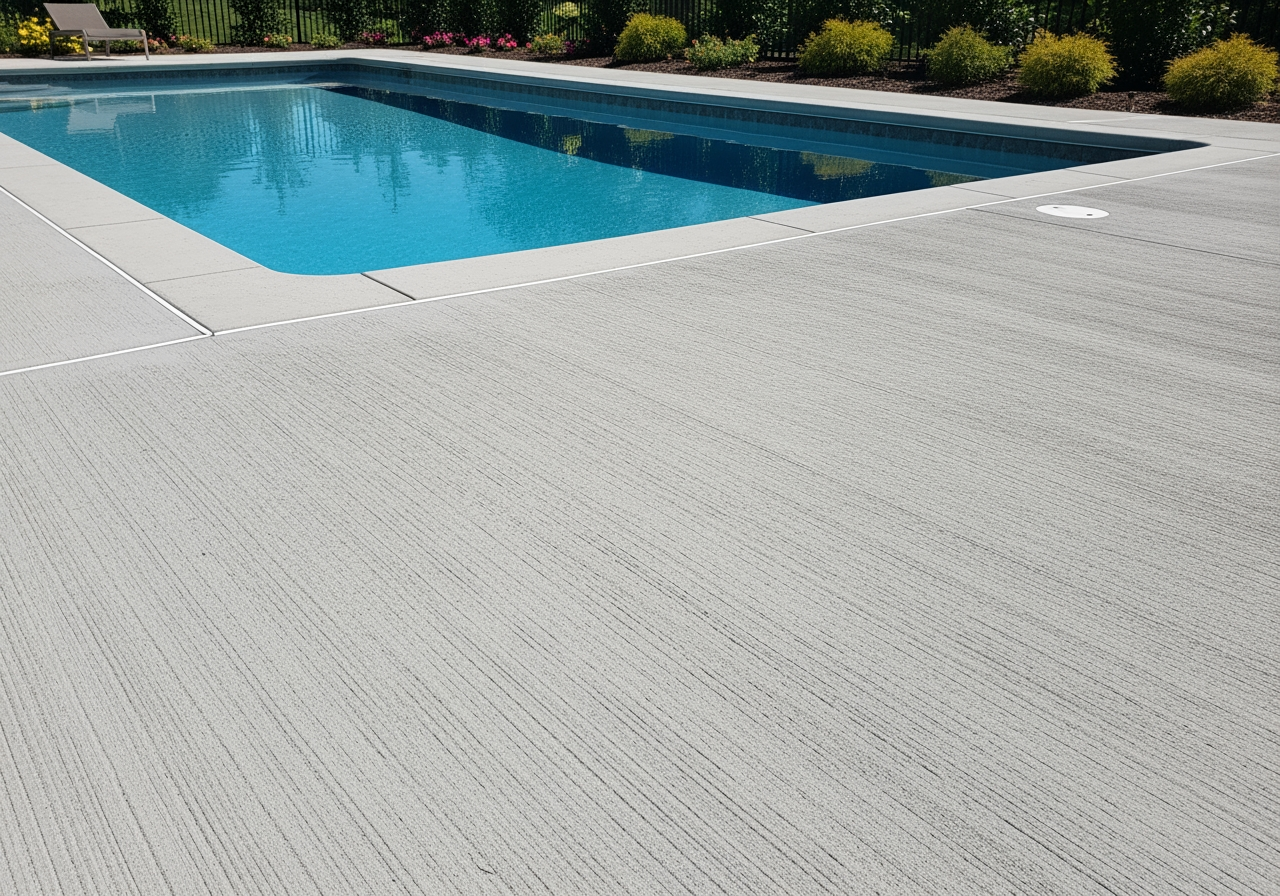
Broom finish concrete is perhaps the most classic and straightforward option for a pool deck. As the name suggests, this finish is created by dragging a special broom across the surface of freshly poured concrete before it fully cures. This process leaves behind a series of fine, parallel lines that provide a simple yet effective texture.
The primary benefit of a broom finish is its excellent slip-resistance, making it a safe choice for areas prone to water splashes, like a pool deck. It offers reliable traction, even when wet, which is crucial for preventing slips and falls. Beyond safety, broom finish concrete is also highly affordable, typically costing around $5-$8 per square foot, making it one of the most budget-friendly concrete options. Its classic, understated look blends seamlessly with various architectural styles, offering a clean and functional aesthetic.
Stamped Concrete
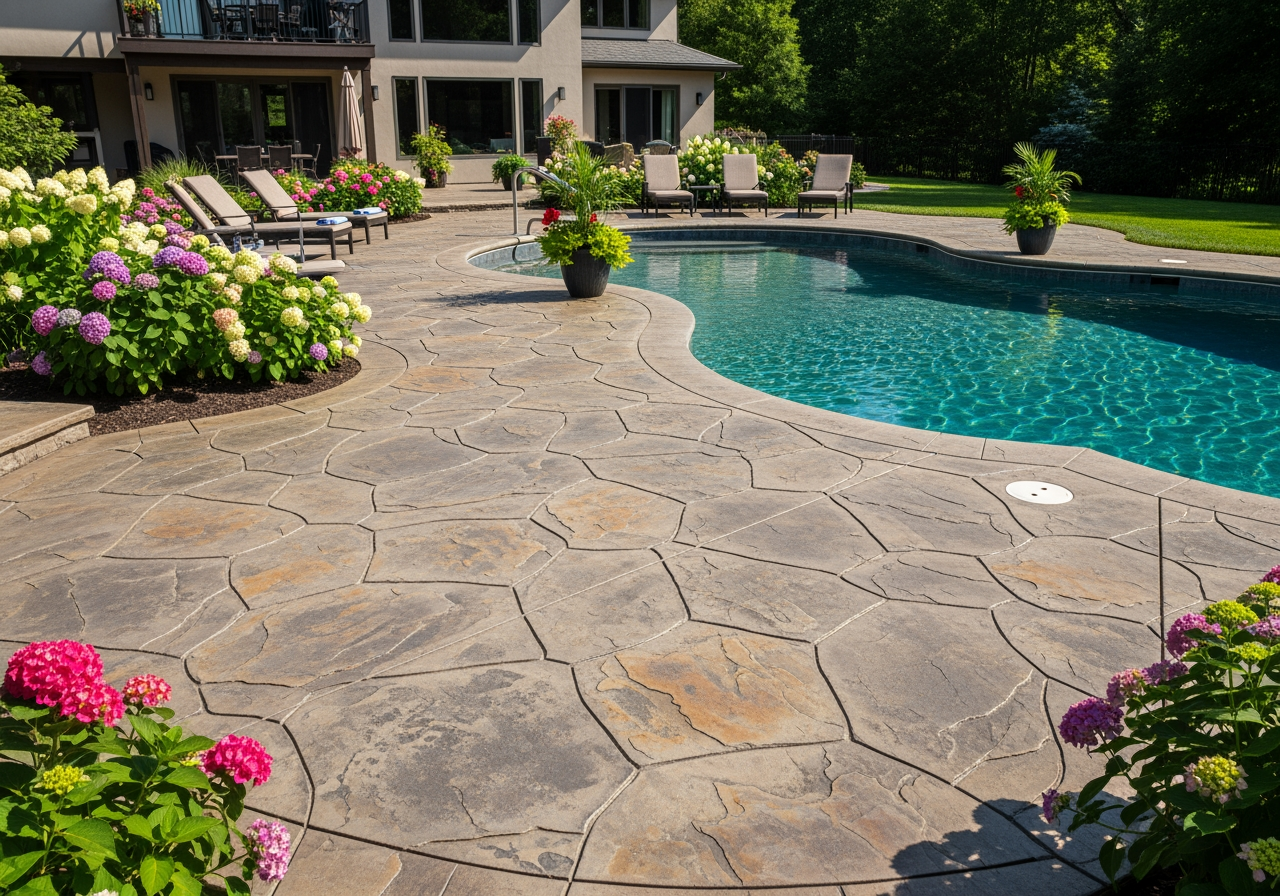
For homeowners seeking a high-end look without the premium price tag of natural materials, stamped concrete is an outstanding solution. This decorative technique involves pressing specialized mats into freshly poured concrete to create patterns that mimic the appearance of natural stone (like flagstone, slate, or travertine), brick, wood planks, or even intricate tile designs.
The benefits of stamped concrete for a pool deck are numerous. It offers unparalleled design versatility, allowing you to achieve sophisticated aesthetics that would otherwise be far more expensive. You can choose from a vast array of patterns and color options, which can be integrated into the concrete mix or applied as surface treatments, to perfectly match your backyard’s theme. The ability to replicate expensive materials at a fraction of the cost—stamped concrete typically ranges from $12-$18 per square foot, significantly less than travertine at $25-$35 per square foot or wood decking up to $70 per square foot—is a major draw.
However, there are some potential drawbacks to consider. While stamped concrete can be designed with textures to improve grip, some patterns or overly smooth sealers can become slippery when wet. It’s crucial to ensure that a non-slip additive is incorporated into the sealer to improve safety. Additionally, like all concrete, stamped concrete will require periodic sealing to protect its color and finish, usually every few years, which is an ongoing maintenance requirement.
Textured and Exposed Aggregate Concrete
Textured concrete offers a middle ground between the simplicity of broom finish and the elaborate patterns of stamped concrete. This finish often involves using various tools or techniques to create a more subtle, yet still highly effective, non-slip surface. It can be achieved by sandblasting, salt finishing, or applying a thin, textured overlay. Textured concrete typically costs around $6-$9 and up per square foot, making it an excellent option for those seeking improved grip and character without the higher cost of stamping. It’s a popular choice because it offers a balance of affordability, safety, and a pleasant underfoot feel.
Exposed aggregate concrete is another popular choice that showcases the natural beauty of the aggregate (small stones, pebbles, or crushed glass) within the concrete mix. This is achieved by removing the surface layer of cement paste to reveal the decorative aggregate beneath. The result is a highly durable, naturally slip-resistant surface with a unique, organic appearance. Exposed aggregate decks are known for their excellent traction, making them very safe around pools, and their low-glare surface is comfortable on bright sunny days. They offer a rugged, natural stone appearance that can complement many outdoor designs.
Cost vs. Value: A Financial Breakdown
When planning your pool deck project, understanding the financial implications is crucial. The cost of a concrete pool deck isn’t just about the initial installation; it also involves considering the long-term value, durability, and maintenance. While concrete is generally a cost-effective option, the specific finish you choose will significantly impact the overall price.
Comparing Decking Material Costs
To help you budget effectively, here’s a comparison of common pool deck materials and their average costs per square foot, based on our research:
Material Type Average Cost Per Square Foot Notes Broomed Concrete $5-$8 per square foot Cost-effective, slip-resistant, simple. Textured Concrete $6-$9 and up per square foot Good balance of grip, character, and affordability. Stamped Concrete $12-$18 per square foot Mimics expensive materials like stone, brick, wood. Saves around 50% compared to travertine. Travertine $25-$35 per square foot Natural stone, premium look, higher cost. — — — Broomed Concrete $5-$8 per square foot Cost-effective, slip-resistant, simple. Textured Concrete $6-$9 and up per square foot Good balance of grip, character, and affordability. Stamped Concrete $12-$18 per square foot Mimics expensive materials like stone, brick, wood. Saves around 50% compared to travertine. Pavers Varies widely, often $10-$20+ per square foot Can be expensive depending on material (e.g., natural stone pavers like travertine are $25-$35/sq ft). Wood Up to $70 per square foot Can be more expensive, requires significant maintenance. Wood Up to $70 per square foot Can be more expensive, requires significant maintenance. Factors Influ influencing Final Price
While the table above provides a useful baseline, several factors can influence the final cost of your concrete pool deck. These include:
- Project Size and Shape: Larger or unusually shaped decks will naturally require more material and labor.
- Design Complexity: Intricate stamped patterns, multiple colors, or custom designs will increase labor time and material costs.
- Site Preparation: If your site requires extensive grading, excavation, or the removal of old decking, these costs will add up.
- Labor Costs: These vary by region and the experience of the contractor.
- Regional Pricing: Material and labor costs can fluctuate significantly based on your geographic location.
- Installation Considerations: Different concrete finishes might require specific installation techniques or more specialized tools, which can impact the overall cost. For example, complex stamped patterns require skilled labor and careful execution to ensure a realistic and durable finish.
The Pros and Cons of Concrete Pool Decks
When choosing a concrete pool deck, it’s important to weigh both the advantages and potential drawbacks to make an informed decision. This ensures you select a material that not only looks great but also meets your long-term needs for durability, maintenance, and safety.
Key Advantages
Concrete has been a cornerstone of construction for millennia, with a history stretching back to at least 6500 BC. This long legacy speaks to its inherent strengths, many of which make it an ideal material for pool decks:
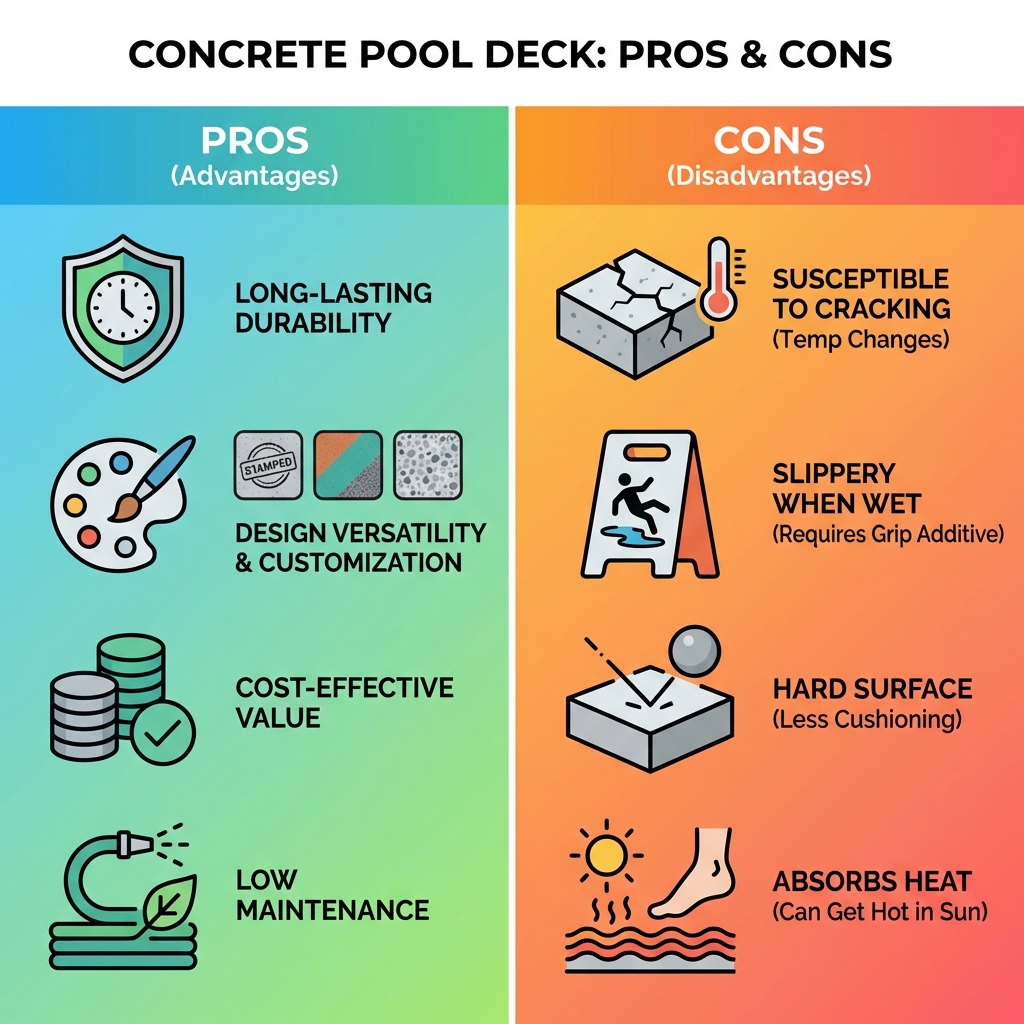
- Durability and Longevity: Concrete is renowned for its strength and resilience. A well-installed and properly maintained concrete pool deck can easily last for 30 years or more. It stands up well to heavy foot traffic, the weight of patio furniture, and the harsh effects of weather, including sun, rain, and even snow in colder climates. This durability means you won’t have to worry about frequent replacements or major repairs, making it a sound long-term investment.
- Cost-Effectiveness: Compared to other popular decking materials, concrete is often the most budget-friendly option. As detailed in our cost comparison, basic concrete finishes are significantly more affordable than natural stone, pavers, or composite decking. This initial cost saving, combined with its long lifespan and low maintenance requirements, makes concrete an excellent value proposition. You can achieve a high-end look without the high-end price tag, freeing up your budget for other backyard improvements.
- Low Maintenance: One of the most significant benefits of a concrete pool deck is its ease of care. Unlike wood, which requires regular staining and sealing to prevent rot and weathering, concrete is far less demanding. Routine cleaning with a hose or pressure washer and periodic resealing every few years are typically all that’s needed to keep it looking its best. This low-maintenance nature means you can spend more time enjoying your pool and less time working on it.
- Design Versatility: Concrete is a highly versatile material that can be customized to match any aesthetic. Through techniques like stamping, staining, and coloring, you can create a wide range of looks. For example, stamped concrete can mimic the appearance of more expensive materials like natural stone, brick, or even wood planks, giving you a luxurious finish at a fraction of the cost. You can also choose from a vast array of colors and textures to create a unique design that complements your home and landscape. For more design ideas, you can consult with local design and build professionals or look for inspiration in home improvement magazines and websites.
- Safety: A key consideration for any pool area is safety, and concrete offers excellent slip-resistance. Finishes like broom-finished, textured, and exposed aggregate provide a naturally rough surface that offers good traction, even when wet. This is a crucial feature for preventing slips and falls, especially in a family-friendly environment where children may be running and playing.
- Multi-purpose Use: A pool deck is more than just a walkway around your pool; it’s an extension of your living space. According to statistics from the Pool & Hot Tub Alliance, many homeowners use their pool decks for a variety of activities, including sunbathing, dining, and entertaining. The durability and versatility of concrete make it an ideal surface for all these uses, providing a solid and stable foundation for patio furniture, grills, and other outdoor amenities.
Potential Drawbacks
While concrete offers many benefits, it’s also important to be aware of its potential downsides:
- Cracking Potential: Concrete can be prone to cracking over time due to temperature fluctuations, ground movement, and curing. While minor hairline cracks are often just cosmetic, larger cracks can be a structural concern. However, this risk can be significantly mitigated with proper installation. Experienced contractors will use control joints, which are strategically placed grooves that encourage the concrete to crack in a controlled and predictable way. This prevents the formation of random, unsightly cracks and helps maintain the integrity of the slab.
- Surface Temperature: A common concern with concrete decks is that they can get hot in direct sunlight, especially in warmer climates. The color of the concrete plays a significant role in how much heat it absorbs. Darker colors, such as deep grays or browns, will absorb more solar radiation and become hotter to the touch. Lighter colors, like white, beige, or light gray, reflect more sunlight and stay cooler. If you live in a hot climate, choosing a lighter color or applying a special heat-reflective coating can make your pool deck much more comfortable for bare feet.
- Slipperiness of Sealed Surfaces: While many concrete finishes are naturally slip-resistant, the application of a sealer can sometimes make the surface slippery, particularly when wet. This is especially true for high-gloss sealers that create a smooth, non-porous film. To counteract this, it’s important to use a sealer that is specifically designed for pool decks and includes a non-slip additive. These additives are fine, gritty particles that are mixed into the sealer to create a textured surface that provides better traction.
- Repair and Color Matching: If your concrete deck does get damaged, repairs can sometimes be challenging. Matching the color and texture of the existing concrete can be difficult, especially if the deck has been in place for several years and has been exposed to the elements. This can result in visible patches that detract from the overall appearance of the deck. For this reason, it’s important to address any damage promptly and, if possible, use the same materials and techniques that were used in the original installation.
Albuquerque
Maintaining your concrete pool deck is crucial for its longevity, appearance, and safety. A well-cared-for deck improves your outdoor living space and protects your investment. From routine cleaning to protective sealing and necessary repairs, understanding these essential steps will ensure your concrete pool deck remains a beautiful and functional asset for years to come.
The Importance of Regular Cleaning
Regular cleaning is the first line of defense against wear and tear on your concrete pool deck. Dirt, debris, leaves, and algae can accumulate, leading to several problems:
- Stain Prevention: Organic matter, if left on the surface, can cause unsightly stains that are difficult to remove later.
- Mold and Mildew: In damp environments, mold and mildew can thrive on concrete surfaces, not only detracting from its appearance but also creating slip hazards.
- Slip Hazards: Beyond biological growth, general grime can reduce the friction of your deck, making it more slippery when wet.
We recommend regular sweeping or hosing down of your deck. For deeper cleaning, a power washer with a suitable concrete cleaner can effectively remove stubborn dirt, grime, and mildew. For a pristine look, professional Albuquerque cleaning and restoration services can tackle deep-set grime, ensuring your deck is not only visually appealing but also safe for everyone enjoying your pool.
Sealing and Protecting Your Investment
Sealing is perhaps the most critical maintenance step for a concrete pool deck. A high-quality sealer acts as a protective barrier, extending the life of your deck and preserving its aesthetic appeal.
- UV Protection: Sealers help protect the concrete from the sun’s harsh UV rays, which can cause colors to fade over time.
- Water Resistance: They prevent water penetration, which is vital for preventing freeze-thaw damage in colder climates and inhibiting the growth of mold and mildew.
- Stain Resistance: A sealed surface is less porous, making it more resistant to stains from spills, chemicals, and organic debris.
- Improved Appearance: Sealers can improve the color and finish of your concrete, giving it a richer, more vibrant look.
How often should you seal your concrete pool deck? Most experts recommend resealing every 2-3 years, though this can vary based on climate, traffic, and the type of sealer used. For example, in areas with intense sunlight, annual sealing might be beneficial.
How does concrete pool deck coating affect its cooling properties? This is a critical consideration for comfort. Some specialized coatings, often referred to as \”Cool Deck Coatings,\” are designed to significantly reduce the surface temperature of concrete. Products like Cool Pool Deck Coating kits, which cost around $259.00 + Taxes and cover up to 200 square feet with two coats, claim to reduce heat build-up by as much as 38%. These coatings use proprietary formulations to dissipate heat more effectively than standard concrete or paint.
When choosing a concrete pool deck paint or coating (Q11), consider these key factors:
- Heat Reflectivity: Opt for lighter colors and coatings specifically designed to reflect heat.
- Slip Resistance: Ensure the paint/coating contains non-slip additives or has inherent textured properties.
- Chemical Resistance: It must withstand exposure to pool chemicals like chlorine without degrading.
- Durability and UV Resistance: Choose products formulated for outdoor use that can endure heavy traffic and prolonged sun exposure.
- Ease of Application: For DIY projects, look for user-friendly kits.
- Longevity: Research the expected lifespan and reapplication frequency.
For more detailed information on sealing, you can refer to guides like Should You Seal Concrete Pool Deck.
Minor Repairs and Upkeep for Albuquerque cleaning and restoration
Even with the best maintenance, concrete decks can sometimes incur minor damage. The good news is that concrete pool decks can be repaired.
- Crack Fillers: Small, non-structural cracks can often be filled with specialized concrete crack fillers. This prevents water from seeping in and causing further damage.
- Patching Spalling: Spalling, where the concrete surface chips or flakes, can be repaired using concrete patching compounds. The damaged area is cleaned, prepped, and the patch is applied and smoothed.
- DIY vs. Professional Repair: While minor crack filling can be a DIY task, more extensive repairs, such as repairing larger cracks or addressing structural issues like sinking concrete, are best left to professional contractors. They have the expertise and equipment for techniques like slabjacking, which lifts settled concrete. You can find more information on various repair methods at Pool Deck Repair – Fix Concrete Cracks Around Your Pool.
Maintaining a safe surface is paramount. Always address any trip hazards promptly. This aspect of Albuquerque cleaning and restoration ensures your deck remains flawless and safe for all users, protecting both your investment and your family.
Frequently Asked Questions about Concrete Pool Decks
We receive many questions about concrete pool decks, and we want to address some of the most common concerns to help you feel fully informed.
How long does a concrete pool deck last?
With proper installation and consistent maintenance, a concrete pool deck boasts an impressive lifespan. Generally, you can expect a concrete deck to last for 30+ years. This longevity is a significant advantage, offering decades of enjoyment with relatively minimal upkeep. Key factors influencing this lifespan include:
- Quality of Installation: A properly prepared sub-base, correct concrete mix, and professional finishing are crucial.
- Regular Maintenance: Adhering to a routine cleaning schedule and periodic sealing significantly extends the deck’s life.
- Climate: Extreme freeze-thaw cycles or intense, prolonged sun exposure can impact durability, though modern concrete and sealers are designed to mitigate these effects.
Do concrete pool decks always crack?
It’s a common misconception that all concrete decks will inevitably crack in an unsightly way. While concrete is prone to natural expansion and contraction due to temperature fluctuations, and hairline cracks can occur, proper installation techniques are designed to manage this. The most effective method is the strategic placement of control joints. These are intentional cuts made into the concrete slab that create weakened planes, directing any potential cracking along these lines. When done correctly, these cracks are contained and become part of the design, making them far less noticeable than random, uncontrolled fissures. So, while concrete may develop minor cracks, a professionally installed deck with proper control joints should remain aesthetically pleasing and structurally sound.
What is the best way to keep a concrete pool deck cool?
The surface temperature of your pool deck can significantly impact comfort, especially on hot summer days. The best way to keep a concrete pool deck cool involves a combination of choices:
- Light Colors: This is perhaps the most impactful factor. Lighter-colored concrete, whether achieved through integral pigments, stains, or coatings, reflects more sunlight and absorbs less heat than darker colors. The difference in temperature between a white and a charcoal concrete surface can be as much as 40 degrees Fahrenheit.
- Heat-Reflective Coatings: As mentioned earlier, specialized “Cool Deck Coatings” are engineered to reduce heat absorption. Products like Cool! coating can reduce heat build-up by as much as 38% by drawing heat into the soil below rather than radiating it upwards.
- Textured Surfaces: While color is primary, a textured surface can also play a minor role. Textures can create small air pockets or break up direct solar absorption, potentially feeling slightly cooler than a perfectly smooth, dense surface.
- Pigment Choice: The type of pigment used in colored concrete can also influence heat absorption. Some pigments are more reflective than others, even within similar color ranges.
When planning your pool deck, prioritizing lighter colors and considering a heat-reflective coating can make a substantial difference in comfort, allowing you to walk barefoot even on the hottest days.
Conclusion
Choosing a concrete pool deck is a decision that blends practicality with endless design possibilities. We’ve explored the rich history of concrete, its diverse finishes—from the simple, slip-resistant broom finish to the neat, mimicked textures of stamped concrete and the natural appeal of exposed aggregate—and the significant cost differences that can impact your budget.
Weighing the pros and cons, it’s clear that concrete offers remarkable durability, a long lifespan of 30+ years, and impressive design versatility at a generally cost-effective price point. While concerns about cracking and surface temperature are valid, modern installation techniques like control joints and innovations like heat-reflective coatings effectively address these issues.
Proper maintenance, including regular cleaning and periodic sealing, is paramount to preserving your deck’s beauty and structural integrity. For any deeper cleaning or restoration needs, don’t hesitate to reach out to professional services like those specializing in Albuquerque cleaning and restoration.
Your perfect backyard oasis should reflect your style, fit your budget, and provide a safe, enjoyable space for your family and friends. By considering these key factors—your budget, desired aesthetics, and commitment to maintenance—you can confidently make the best choice for your concrete pool deck, ensuring it remains the inviting centerpiece of your outdoor living space for decades to come.