Getting Your Home Air Conditioning System Ready for Summer Heat
Many air-conditioning units break down not because they’re old or out of luck, but because a tiny, inexpensive repair was overlooked for far too long – eventually turning into a compressor failure on the hottest day of the year. A 15-minute check of your system right now is free. Ignoring it will cost you a service call at premium rates and a house that feels like an oven.
Start with the filter, because it affects everything else
Before summer arrives, there is one essential thing you should do – change the filter. A blocked filter causes air not to flow easily through the entire system, which means the blower must exert more effort and the evaporator coil cools more than necessary. This can cause the coil to freeze. Once it’s frozen, the system won’t have any airflow until it defrosts.
According to the U.S. Department of Energy, a dirty filter can increase your energy consumption by 5% to 15%. That’s a significant amount added to your electric bill. Make sure to check the filters each month in the summer and replace them every one to three months. If you have pets or keep the system running constantly, then replace the filters even more frequently.
Clear the outdoor unit and give it room to breathe
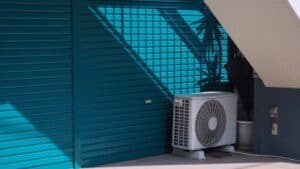
Ensure that no plants or bushes are blocking your condenser coil. This component is responsible for releasing hot air from the inside of your house to the outside environment. If it’s obstructed, it will recycle hot air and cause your compressor to work overtime. The best way to avoid this is by keeping at least two feet of space around your condenser coil and rinsing it with a water hose – not a pressure washer, that bends the fins – to remove any debris every once in a while. This takes ten minutes and it’s one of the highest-return maintenance tasks a homeowner can do without any tools or training.
Know where DIY ends and a technician takes over
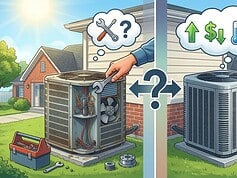
Filters, debris, drain lines, and thermostat settings are all fair game for homeowners. Refrigerant charge, electrical connections, capacitor testing, and compressor diagnostics are not. R-410A refrigerant requires licensed handling, and a system running low on charge isn’t something you top off yourself – it means there’s a leak somewhere that needs to be found and sealed.
Warm air coming from the vents, weak airflow, strange noises from the outdoor unit, or a sudden jump in your electric bill are all signs the problem has moved past what a filter change can fix. At that point, calling AC Repair Services is the right move rather than opening up the unit yourself. A technician can pressure-test refrigerant, check the capacitor’s electrical output, and inspect coil condition in about the same time it takes you to mow the lawn.
Flush the condensate drain line before algae wins
The condensate drain line is there to pull the humidity out of your home and divert it back outside. However, over time, algae and mold can build up inside the tube. Once it clogs, water starts backing up. Most systems have a float switch that will shut the whole unit down when that happens, so that’s no cooling until someone gets up there and clears the line.
You can either pour a cup of white vinegar down the access port every couple of months, or use a wet/dry shop vac at the outdoor termination point to pull the clog out. It’s not fun work, but it’s the difference between a dry closet and a ceiling stain.
Set your thermostat to work with the season, not against it
A programmable schedule that bumps the temperature up a few degrees while you’re out and brings it back down before you’re home reduces runtime without making anyone uncomfortable. Less runtime means less wear on the compressor and capacitor over the course of a summer. If your thermostat is still set to one flat number twenty-four hours a day, you’re paying for cooling nobody’s using.
Schedule the tune-up before the heat, not during it
A pre-season inspection checks the things a homeowner can’t check alone: refrigerant levels, capacitor health, electrical tightness, and coil condition on both the indoor and outdoor units. If you call this in in spring, before demand peaks, you get a technician on your timeline instead of a three-day wait during a heatwave when every AC company in town is booked solid.
This matters just as much if you run a heat pump, since the same components handle your winter heating too. Neglect shows up twice a year instead of once.
Emergency repair always costs more than scheduled service, and it always happens at the worst possible time. A little maintenance in spring buys you a summer where the only thing you’re sweating is how cold to set the thermostat, not whether the system’s going to make it through August.